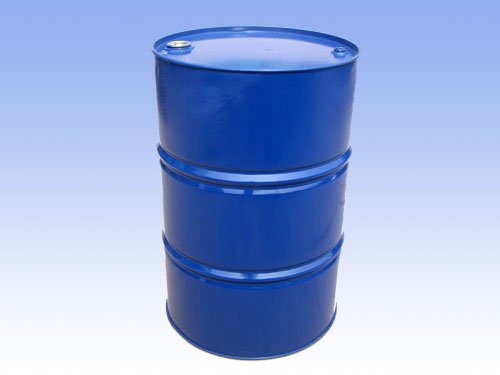
Senfeida 1,6-Hexanediol Diacrylate HDDA CAS13048-33-4 Monomer
SUZHOU SENFEIDA CHEMICAL MATERIAL CO.,LTD
The supplier hasn’t listed a price. We can get their current prices and MOQ.
Verify from $29 · written report in 3 business days · 100% refund if not satisfied
Senfeida 1,6-Hexanediol Diacrylate HDDA CAS13048-33-4 Monomer
SUZHOU SENFEIDA CHEMICAL MATERIAL CO.,LTDThe supplier hasn’t listed a price. We can get their current prices and MOQ.
Verify from $29 · written report in 3 business days · 100% refund if not satisfied
About this product
- Size: 0.1㎡
- Color: Colorless
- Quality: Industrial
- Colour: Colorless
- Appearance: Liquid
- Exports to: Mainland China, Africa, Middle East, Southeast Asia, South Asia, Central Asia, USA and Canada, Latin America, Russia, EU, Other European Countries, Japan and South Korea, Hong Kong China, Macao China and Taiwan China
About this product
- Size: 0.1㎡
- Color: Colorless
- Quality: Industrial
- Colour: Colorless
- Appearance: Liquid
- Exports to: Mainland China, Africa, Middle East, Southeast Asia, South Asia, Central Asia, USA and Canada, Latin America, Russia, EU, Other European Countries, Japan and South Korea, Hong Kong China, Macao China and Taiwan China
Product details
| Size | 0.1㎡ |
|---|---|
| Color | Colorless |
| Quality | Industrial |
| Colour | Colorless |
| Appearance | Liquid |
Product details
| Size | 0.1㎡ |
|---|---|
| Color | Colorless |
| Quality | Industrial |
| Colour | Colorless |
| Appearance | Liquid |
From the supplier
1,6-Hexanediol Diacrylate (HDDA), CAS No. 13048-33-4, is the most commonly used bifunctional reactive diluent monomer in the UV/LED photocuring field. With a linear six-carbon chain structure as its core, it combines low viscosity, high reactivity, high crosslinking density, high hardness, and good flexibility, and is widely used in coatings, inks, adhesives, 3D printing, and other systems.
1. Core performance characteristics 1) Ultra-low viscosity and strong dilution power Viscosity is only 5–12 mPa·s (25℃), significantly reducing the viscosity of high-viscosity resin systems, enhancing application fluidity and wettability, and reducing the difficulty of application for high-solid content formulations.
2) High reactivity and rapid curing: The diacrylate double bond has high reactivity, enabling rapid crosslinking and polymerization under UV/LED irradiation. With a fast curing rate, it is suitable for high-speed production lines and can be paired with commonly used photoinitiators such as 184, TPO, and ITX.
3) High hardness, high wear resistance, high crosslinking density after chemical curing, high hardness (pencil hardness up to 2H–3H), scratch resistance, solvent resistance, acid and alkali resistance, water resistance, enhancing the durability of coating/ink surface.
4) Balancing hardness and toughness, the low-shrinkage six-carbon flexible long chain provides moderate flexibility, with a low curing shrinkage rate (about 8%-10%), reducing internal stress, cracking, and warping, while maintaining both hardness and bending resistance.
5) Excellent adhesion: It exhibits good adhesion to substrates such as plastics (ABS/PC/PMMA), metals, glass, paper, and wood, making it suitable for multi-material coating and printing.
6) Low odor, low volatility, good storage stability (can be stored for 6-12 months in a dark and sealed environment), and not prone to self-aggregation.
2. Main application areas: 1) UV-curable coatings, including wood coatings, plastic coatings, metal anti-corrosion coatings, vacuum plating primers, paper varnishes, optical fiber coatings, and electronic product topcoats, to enhance hardness, wear resistance, and gloss.
2) UV printing ink for offset printing, silk screen printing, flexo printing, inkjet printing, PCB solder mask ink, and touch screen ink, enhancing adhesion, wear resistance, color fastness, and curing speed.
3) UV adhesive, structural adhesive, pressure-sensitive adhesive, electronic potting adhesive, glass/plastic bonding adhesive (such as for mobile phone screen bonding), enhancing bonding strength and aging resistance.
4) 3D printing photosensitive resin SLA/DLP 3D printing resin, which reduces viscosity, increases hardness, accelerates curing, and enhances the precision, surface finish, and mechanical strength of printed parts.
5) Other fields include water-based UV systems, UV nail polish, dental materials, photoresists, polymer crosslinking modification, and lithium battery polymer electrolytes.
From the supplier
1,6-Hexanediol Diacrylate (HDDA), CAS No. 13048-33-4, is the most commonly used bifunctional reactive diluent monomer in the UV/LED photocuring field. With a linear six-carbon chain structure as its core, it combines low viscosity, high reactivity, high crosslinking density, high hardness, and good flexibility, and is widely used in coatings, inks, adhesives, 3D printing, and other systems.
1. Core performance characteristics 1) Ultra-low viscosity and strong dilution power Viscosity is only 5–12 mPa·s (25℃), significantly reducing the viscosity of high-viscosity resin systems, enhancing application fluidity and wettability, and reducing the difficulty of application for high-solid content formulations.
2) High reactivity and rapid curing: The diacrylate double bond has high reactivity, enabling rapid crosslinking and polymerization under UV/LED irradiation. With a fast curing rate, it is suitable for high-speed production lines and can be paired with commonly used photoinitiators such as 184, TPO, and ITX.
3) High hardness, high wear resistance, high crosslinking density after chemical curing, high hardness (pencil hardness up to 2H–3H), scratch resistance, solvent resistance, acid and alkali resistance, water resistance, enhancing the durability of coating/ink surface.
4) Balancing hardness and toughness, the low-shrinkage six-carbon flexible long chain provides moderate flexibility, with a low curing shrinkage rate (about 8%-10%), reducing internal stress, cracking, and warping, while maintaining both hardness and bending resistance.
5) Excellent adhesion: It exhibits good adhesion to substrates such as plastics (ABS/PC/PMMA), metals, glass, paper, and wood, making it suitable for multi-material coating and printing.
6) Low odor, low volatility, good storage stability (can be stored for 6-12 months in a dark and sealed environment), and not prone to self-aggregation.
2. Main application areas: 1) UV-curable coatings, including wood coatings, plastic coatings, metal anti-corrosion coatings, vacuum plating primers, paper varnishes, optical fiber coatings, and electronic product topcoats, to enhance hardness, wear resistance, and gloss.
2) UV printing ink for offset printing, silk screen printing, flexo printing, inkjet printing, PCB solder mask ink, and touch screen ink, enhancing adhesion, wear resistance, color fastness, and curing speed.
3) UV adhesive, structural adhesive, pressure-sensitive adhesive, electronic potting adhesive, glass/plastic bonding adhesive (such as for mobile phone screen bonding), enhancing bonding strength and aging resistance.
4) 3D printing photosensitive resin SLA/DLP 3D printing resin, which reduces viscosity, increases hardness, accelerates curing, and enhances the precision, surface finish, and mechanical strength of printed parts.
5) Other fields include water-based UV systems, UV nail polish, dental materials, photoresists, polymer crosslinking modification, and lithium battery polymer electrolytes.
About the supplier
- ✓Exhibited at 1 recent Canton Fair
- ✓Foreign Trade Company
- ✓Founded 2013
Manufacturing exhibitors show in Phase 1 of the Canton Fair, 15 to 19 October 2026.
- Exhibited at 1 recent Canton Fair
- Foreign Trade Company
- Founded 2013
More from SUZHOU SENFEIDA CHEMICAL MATERIAL CO.,LTD

Similar products from other suppliers